Drowning in data? Dashboards are your lifeline
 Your business generates massive amounts of data, but is any of it actually helping you? Without the right tools, raw data is just noise. Business dashboards are the solution. They organize and display your most important metrics on a single screen, helping you spot trends, track performance, and uncover valuable insights that would otherwise be overlooked.
Here’s what you can do with data dashboards:
Refine your marketing strategies
Your marketing team deals with a constant flow of data from many different channels. A marketing dashboard simplifies this by bringing all that information together. It allows your team to easily compare metrics, spot emerging patterns, and predict future trends. With these insights, they can build more targeted and effective marketing campaigns that deliver better results.
Boost your sales performance
Give your sales team the power of real-time insights. Sales dashboards connect directly to your data sources, providing up-to-the-minute information on product performance, revenue growth, and customer behavior. This eliminates manual entry and gives your team constant access to the most current information. With a clear view of the sales landscape, your team can identify top-performing products, gauge market demand, and refine their sales approach.
Streamline your social media efforts
Juggling multiple social media accounts can be a major drain on your team’s time. A social media management dashboard solves this by consolidating all your platforms into a single, easy-to-use interface. It offers a unified view of your entire social media presence, providing valuable insights into:
- Campaign performance
- Audience engagement levels
- Key audience demographics
With a consolidated dashboard, your team can create content more efficiently, understand audience behavior, and develop social media strategies that truly connect.
Simplify financial reporting
Dashboards make it easy to present complex financial data in a way that everyone can understand. Financial analysts can display critical information — such as customer invoices, progress toward revenue goals, and business expenses — using interactive and easy-to-read graphs. These visual reports provide your organization with a clear overview of its financial health, making it easier to spot opportunities for improvement and make sound financial decisions.
Improve project collaboration
Keep your projects on track and your team in sync with a project management dashboard. It acts as a central hub where everyone can access project requirements, key deadlines, and individual responsibilities. Team members can track progress, share updates, and communicate effectively to keep everyone aligned and working toward the same goals. Better teamwork helps reduce inefficiencies and drives successful project outcomes.
Are you ready to harness the power of data for your business? Talk with our consultants today. We can provide you with tailored IT solutions and cutting-edge business tools to meet your specific needs.
 Imagine if you could anticipate your next big sales trend or know which marketing campaign will bring the best return. While they can’t predict the lottery, business dashboards get you close. By visualizing your performance data, these tools help you understand past results and forecast future outcomes more accurately, giving you the insights to be proactive, not reactive.
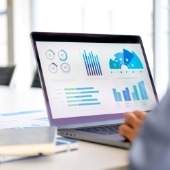 Is your business making decisions based on guesswork? In a world overflowing with data, it’s easy to get lost. Data dashboards cut through the noise, transforming your complex business information into simple, visual reports. They give you a clear, real-time picture of what’s happening in every part of your business, from sales to marketing, so you can make smart decisions fast.
 While the media often focuses on cyberattacks against large corporations, small businesses are actually the most vulnerable and frequently targeted. But why have they become prime targets? Here’s a look at the challenges that make it harder for small businesses to keep up with growing cybersecurity demands.
 Small businesses are feeling the weight of cybersecurity pressures more than ever before. With rising threats, limited resources, and a constant race to keep up, these businesses are struggling to balance their day-to-day operations with the ever-growing need for robust security measures. Find out more about the cybersecurity challenges small businesses are facing today.
 Cybersecurity has become a priority for businesses of all sizes, not just big corporations. Small businesses, often overlooked in the cybersecurity conversation, are now prime targets for cybercriminals. This blog delves into the reasons why small businesses are struggling more with cybersecurity today.
 Your Android phone holds much more than just contacts and apps — it stores your personal, financial, and professional data. With cyberthreats growing in both number and sophistication, you need to be proactive about device security. This guide will walk you through the most common threats and show you how to defend your Android phone against them.
 In an era where your smartphone is a digital extension of your life, securing your Android device is more important than ever. Here’s a comprehensive guide to strengthening your Android phone against potential vulnerabilities, beginning with the most common threats you may encounter.
 Your Android phone is more than just a device; it’s a vault of personal information. But is it truly secure? Cybercriminals are constantly refining their methods, which means you need to take a proactive approach to Android security. Dive into this comprehensive guide to common Android threats and practical steps to transform your smartphone into a digital fortress.
 Enterprise identity management has evolved far beyond local accounts and Active Directory logins, especially with Apple devices entering the mix. This article breaks down Apple’s current approach to identity and device management, how managed Apple Accounts fit in, and why integrating with services such as Apple Business Manager and mobile device management (MDM) tools is key to simplifying Mac and iOS administration.